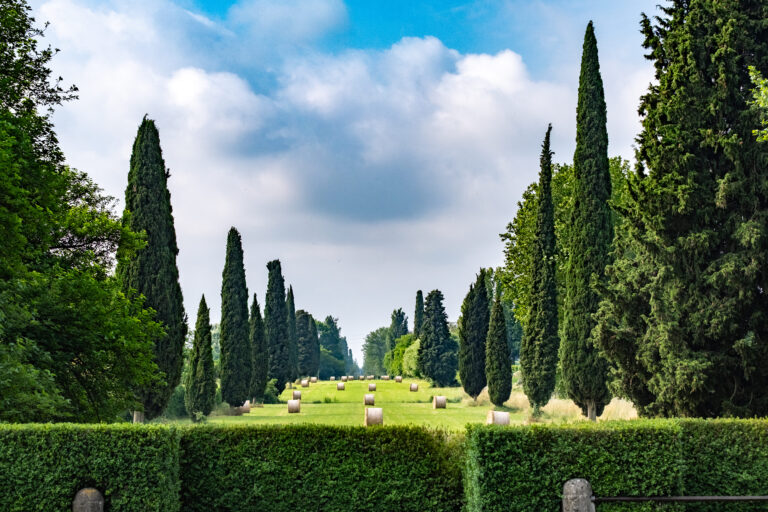
I dare a comparison: Venetian Villas stand on the mainland as a sailing ship does on the ocean.
Villas are like industrious vessels anchored in the open countryside; they follow the rhythms of nature, the seasons—just as ships, on the high seas, move forward by adapting to the winds and currents of different latitudes.
Villas came into being to organize agricultural work more efficiently, to make the land productive and fill the granaries; likewise, ships were built to make use of the sea, to cross it in search of new lands, to transport precious goods, to fill their holds with fish. The villa, wrote Alvise Cornaro, is made for a “sober life,” just as life aboard a ship demands simplicity. Both the working villa and the traveling ship are at the mercy of the weather: wind, dead calm, frost, drought, storm, cloudburst. Villa and ship alike require their stewards to be constantly attentive—maintaining, repairing, adjusting. On land as at sea, the rule of “shared fate” applies: we are all “in the same boat,” as they say—faced with crop failure, pest invasions, and famine on land, or with pirates and shipwreck at sea.
Actually, what is the Venetian villa if not the (political) product of a people who, for centuries, navigated the seas with great and shifting fortunes, learning and courageously practicing the laws of Nature? A people who made knowledge their chief resource, and who already understood the need for a system that could look to the common good as the most concrete form of civilization? Perhaps, then, the villa as a ship is more than a metaphor: both carry us into worlds of dream but also of responsibility, compelling us to reflect on nature, culture, landscape, art, quality of life, civil society, and politics. A complex and necessary voyage.
© Alberto Passi
All rights reserved.